


Property auctions · Real investment experience
Below market value property in Liverpool: £75,000 versus £125,000
A purchase agreed prior to auction at £75,000, compared with another property on the same road advertised at offers over £125,000. Dominic Farrell explains what the numbers reveal and what still needs checking.
The £75,000 Liverpool purchase
In our March 2025 case study, we described a property acquired prior to auction for £75,000. The original account recorded a new roof, external insulation, updated electrics, a new boiler, a well presented interior and tenants already in occupation.
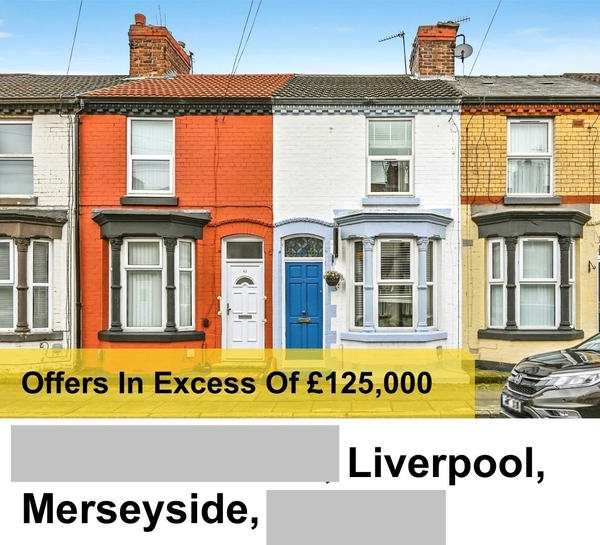
Another property on the same road was advertised by an estate agent at offers over £125,000. Seeing both prompted a useful comparison of price, condition and energy performance.
There was also an EPC discrepancy: the auction information described an E rating, while our research indicated C. Checking the underlying information helped us understand the property more clearly than the headline description suggested.
The lesson: preparation can reveal an opportunity before a competitive auction. You still need evidence for the property’s value, condition, rent and purchase costs.
Why “67% more” and “40% less” both describe the comparison
Using £125,000 as the comparison figure, the difference from £75,000 is £50,000. The percentage changes according to the starting point.
| Measure | Calculation | Result |
|---|---|---|
| Asking price above the purchase price | £50,000 ÷ £75,000 | 66.7%, approximately 67% |
| Purchase price below the asking benchmark | £50,000 ÷ £125,000 | 40% |
The £75,000 was a purchase price. The £125,000 was an asking benchmark, with offers sought above it. The comparison illustrates the gap between the 2 figures; it does not, by itself, prove that the property bought was 40% below independently established market value.
To assess below market value property in Liverpool, use relevant completed sales and adjust for location, size, condition, tenure and any differences in the buildings.
Build an evidence file before calling a property below market value
Record the purchase price and each comparison on a separate line. For each comparable, note the address, sale or listing date, size, tenure, condition, occupancy and the source. Mark clearly whether the figure is an asking price, completed sale or mortgage valuation.
- Completed sales: start with HM Land Registry sold prices, then investigate how closely each property matches.
- Energy performance: check the address and assessment date in the official energy certificate service. If the listing and certificate differ, establish which information is current.
- Works and tenancy: record the cost of making each property suitable for your strategy, the existing rent and any difference from the market rent assessment.
- Your decision: explain the adjustments behind your estimated value and maximum offer. Ask for professional valuation advice where the evidence is thin.
Use several genuinely comparable completed sales to support your assessment, and explain the differences between them. For a separate comparison focused on income, see the £60,000 and £114,000 rental yield example.
What the reported 12% rental yield means
The original case quoted a 12% yield at market rent. Read this as an indicative gross calculation based on the £75,000 purchase price, before costs.
The implied rent calculation: £75,000 × 12% = £9,000 a year, or £750 a month. These are the rent assumptions implied by that yield, rather than a record of rent actually collected.
Net income depends on the rent achieved, empty periods, management, maintenance, insurance and other property costs. Finance and tax affect the owner’s overall return. Include acquisition costs when assessing the return on the money you invest.
Buying property prior to auction
Some sellers will consider an offer before the auction date. Ask the auctioneer whether the seller is willing to negotiate, then make an offer supported by a clear assessment and a credible plan to complete.
Prepare the legal review and finance alongside the offer. Check all charges and the special conditions, and establish when the transaction becomes binding. An agreement prior to auction still needs careful contract advice.
Our property auctions service covers the different stages of an auction purchase. The buying property at auction guide explains the questions to address before committing.
Why local property sourcing matters
A useful sourcing service goes beyond sending a link to a listing. It should help you understand the street, relevant sales, rental demand, condition, likely works and whether the transaction suits your funds and objectives.
That is the starting point for our Property Sourcing Liverpool service. We research opportunities through auctions, receivers, administrators and other distressed situations, then assess them against your investment brief.
For a buy, refurbish, refinance and rent strategy, buying well can create room for costs and valuation uncertainty. Any refinance still depends on the lender’s assessment, the property and the borrowing terms available.
Read our approach to property investment in Liverpool, compare other purchases in the sourcing track record or develop your own judgement through property auction courses with Dominic Farrell.
Below market value property questions
Is an asking price a reliable valuation?
An asking price is the seller’s marketing position. Use completed sales, suitable adjustments and professional valuation advice where needed to assess what a buyer or lender is likely to consider reasonable.
Can a property be a good purchase without a major refurbishment?
Yes. A price supported by the evidence can matter more than the amount of work available. Check condition, legal issues and the tenancy carefully, then assess whether the property meets your objectives after costs.

About Dominic Farrell
Dominic is a director of Tuna Fish Property, author of Property Auctions: Repossessions, Bankruptcies and Bargain Properties and host of The Property Auctions Podcast. His work combines property investment, sourcing and auction education. Meet Dominic and the team.
Put local knowledge behind your next purchase
Tell us what you want your Liverpool investment to achieve. Our team can help you assess suitable opportunities and plan the purchase, letting and ongoing management.
Case figures reflect the original published account and are historical. Estimated values and yields depend on their assumptions. Acquisition costs, works, finance, tax and running costs affect the overall return.