



The Renters’ Rights Act 2025: a highly predictable outcome
Wednesday 2nd September 2026
Dominic Farrell
The Renters’ Rights Act 2025: a highly predictable outcome
Many of us have been warning about this for the past couple of years.
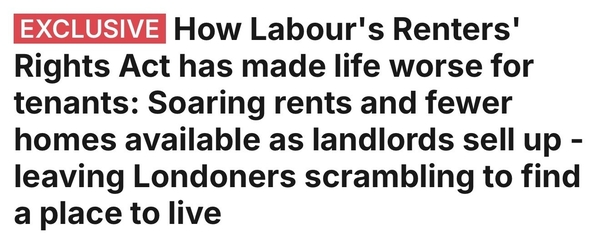
The Renters’ Rights Act may have given tenants more protection on paper, but it has done nothing to address their biggest problem: a shortage of homes.
As landlords leave the market, supply falls. At the same time, demand continues to increase. The inevitable result is greater competition and higher rents.
There is another consequence which receives far less attention.
If it becomes more difficult, expensive and time-consuming for a landlord to regain possession when something goes wrong, landlords will protect themselves at the beginning of the tenancy.
That means increasingly strict referencing. Stable employment, an excellent credit history, a strong income and, in many cases, a homeowner guarantor.
Unless you are effectively a “gold-plated” tenant, securing a property will become considerably harder.
The people most likely to suffer are those at the lower end of the market: applicants with irregular earnings, previous credit problems, benefit income or no access to a guarantor. They will be competing for fewer homes while landlords become increasingly risk-averse.
Tenant protection is important, but legislation cannot repeal the basic laws of supply and demand.
If the Government genuinely wants to help tenants, it must increase housing supply, encourage responsible landlords to remain in the market and create a fast, effective court process for dealing with genuine breaches.
Instead, we have fewer properties, higher rents and more tenants being rejected.
Highly predictable, and entirely avoidable
- RentersRightsAct #PropertyInvestment #BuyToLet #HousingCrisis #PrivateRentedSector