


London and live online · Practical investor training
Property Investment Courses UK
Learn to recognise value. Build a stronger investment plan.
A good property investment starts with the right purchase, a realistic budget and a clear purpose. Learn how to bring those decisions together, whether you want rental income, a renovation project or a growing portfolio.
Join Dominic Farrell, solicitor Claire Farrell and finance specialist Josh Lee for a full day of practical teaching, live research and real property examples.
For beginners, experienced investors and property sourcers. Delivered by Distressed Assets, with the experience behind Tuna Fish Property.

- Next workshop
- Attend
- Central London
or live online - Time
- 10:00 to 17:30 BST
- Full day ticket
- £97 per person
Start with your objective
Property investment training that connects the whole purchase.
The property you buy needs to fit your capital, time and appetite for risk. Our training helps you compare the main approaches and understand what each one demands of you.
Build rental income
Buy to let
Assess the purchase price, likely rent and ongoing costs. Understand the difference between a headline yield and the cash left after finance, management, maintenance and empty periods.
Explore property investmentRecycle capital
BRRR and refurbishment
Buy, refurbish, refinance and rent. Examine how renovation costs, achievable rent, the lender’s valuation and mortgage criteria affect how much capital may remain in a property.
Explore the BRRR approachCreate a resale margin
Property trading and resale
Identify where value may be added, then allow for buying costs, works, finance and selling costs. Test whether the margin is worthwhile if the project takes longer or sells for less.
Read investment case studiesThe investment discipline
Learn to buy property with inbuilt equity.
Buying below market value means paying less than a property is worth, with the evidence to support that assessment. The gap can give you a margin at the outset, before you consider renovation or future growth.
Our approach starts in the wholesale property market: auctions, unsold lots, receivers, administrators and genuine off market opportunities. Learn to investigate why a property is being sold, compare recent sales and assess rental demand. A claimed discount means little until you have checked the evidence and priced the work or legal issues involved.
Then do the maths. Inbuilt equity is a gap between price and assessed value, not money in your bank account. Allow for the full cost of buying, finance and any work before setting your maximum purchase price. A disciplined investor is willing to walk away.
Who the training is for
Property investment courses for beginners and experienced investors.
Bring your own objectives to the day. The principles apply whether you are preparing for your first purchase, refining a portfolio or researching opportunities for clients.
Your first investment
Start with a clear buying brief
Understand the strategies, language and numbers before putting your capital at risk. Learn what to research, who to involve and how to judge whether a property fits your budget and objectives.
Your next acquisition
Sharpen your investment decisions
Challenge your assumptions about value, rent and refinancing. Explore different buying routes and test the next acquisition against your portfolio’s cash flow, capital requirements and longer term plan.
Property sourcing
Assess the deal for your client
Learn to investigate an opportunity, explain the evidence behind the price and present the figures clearly. A credible investment appraisal accounts for the client’s strategy, total costs and proposed exit.
The full workshop syllabus
From an investment idea to a considered purchase.
The Property Auctions and Distressed Assets One Day Intensive Course combines the auction purchase process with wider investment strategy, sourcing, risk and finance. The topics below bring together the full programme.
Choose a strategy that fits
Set your objectives, budget and timescale. Compare buy to let, BRRR, refurbishment, development and resale. Consider how much time, cash and borrowing each approach requires, and the market evidence you need before choosing a property.
Understand distressed property
Explore why properties reach the distressed market and how the seller’s circumstances can affect a sale. Examine repossessions, probate, receivers and administrators, together with Dominic’s distinction between retail and wholesale buying.
Find opportunities through live research
Watch a live search of auction properties. Use filters to turn a catalogue into a shortlist, investigate unsold lots and consider genuine off market sources. Learn to question a claimed discount and recognise the off market illusion.
Assess value and investment returns
Compare relevant sales and rental evidence. Allow for acquisition costs, tax, auction fees, finance, renovation costs and selling costs. Understand the key investment ratios and calculate a maximum purchase price that fits your intended return.
Inspect the property and its location
Explore what to look for at a viewing and what viewing videos can reveal. Assess condition, local demand and the likely scope of works. Recognise issues that need a surveyor, contractor or further investigation before you can price the risk.
Understand the legal pack
Work through title documents, searches, the sale contract, Special Conditions of Sale, leasehold information and relevant planning or building documents. Identify additional obligations and costs, and the questions your own solicitor needs to answer.
Evaluate problem properties
Discuss short leases, missing freeholders, absent management companies, occupation issues, former cannabis farms, missing planning or building documentation, unilateral notices and charges. Assess whether a problem may be manageable and what resolving it would involve.
Manage risk before committing
Use a risk management matrix to consider likelihood and impact. Bring legal, property and financial risks together. Discuss possible solutions, the circumstances in which indemnity insurance may be relevant, and the point at which to walk away.
Negotiate and prepare to bid
Consider offers prior to auction and negotiations after an auction. Understand registration, auction terms, addenda and online, live and proxy bidding. Set your maximum bid and keep the investment case in view when the bidding starts.
Arrange finance and plan the exit
Explore cash, bridging finance and mortgage options with Josh. Understand what a lender needs, allow for the completion timetable and examine repayment or refinancing. Test the deal against delays, higher costs or a lower valuation.
Explore additional acquisition structures
Learn how property call options and debt for asset swaps can be used. Consider the role of Law of Property Act receivers and other specialist sales. These topics show why the structure of a transaction can matter as much as the property.
Use AI to support your research
See how AI can help screen opportunities, organise property information and flag questions within a legal pack. Check its output against the source documents and use it to prepare for professional advice. Your solicitor must review the specific purchase.
Bring your questions. The day combines teaching, current opportunities and real purchases. You can ask the team how the principles apply to the type of investment you are considering.
Explore the bidding, legal checks and completion stages in more detail in our guide to property auction courses.
Investment · Law · Finance
Learn from the people who work with these decisions.
The course brings 3 professional perspectives into the same room. Understand how an investor, a solicitor and a finance specialist approach the same opportunity.

Dominic Farrell
Property investor, author and course host
Dominic has been buying property since 1999, with a focus on distressed assets since 2008. His experience spans sourcing, development and investment through different market cycles.
A former British Army Major and Sandhurst graduate, he holds a BSc in Economics and an MBA (Defence). He is the author of Property Auctions: Repossessions, Bankruptcies and Bargain Properties, now in its 4th edition.
Your focus: Strategy, research, valuation and buying discipline.
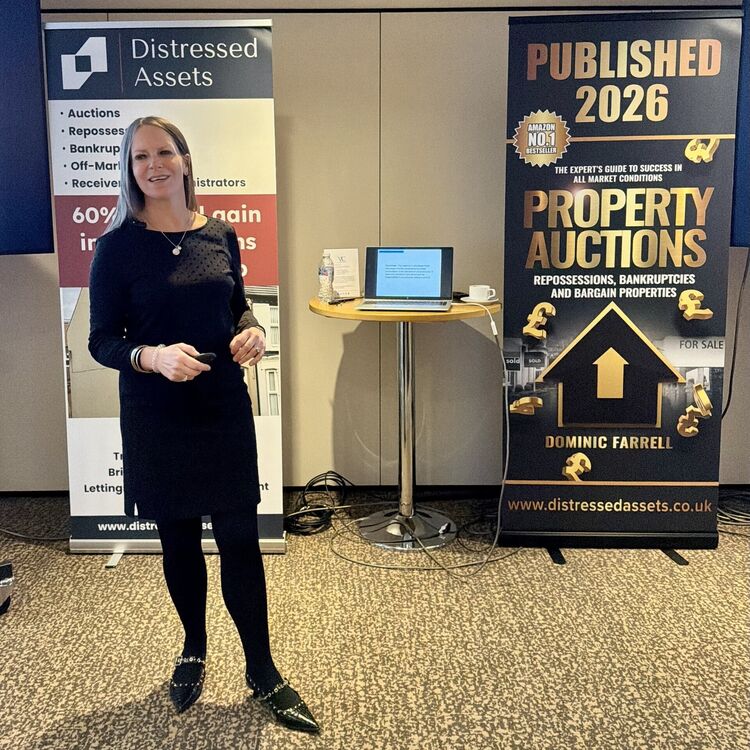
Claire Farrell
Property and construction solicitor
Claire is a practising solicitor with 25 years’ experience, a property investor and Senior Lecturer in Property and Construction Law at Leeds Beckett University.
Formerly Director of Legal at Balfour Beatty Construction, she explains the documents, obligations and legal questions that can change the investment case.
Your focus: Legal packs, title issues and contractual risk.

Josh Lee
Mortgage and bridging finance specialist
Josh is a CeMAP qualified mortgage and bridging finance specialist with The UK Adviser. He brings the funding perspective to your property decisions.
Explore how lenders assess a proposal, where bridging finance may fit and why your route to repayment or refinancing needs to be considered before you buy.
Your focus: Funding, lender requirements and the exit plan.
Course attendee feedback
A clearer plan for the next step.
Course attendees describe the clarity, practical experience and value they took from the day. These excerpts reflect their individual experiences.
Sonia M“gold standard and fantastic value for money”
A Rosenthal“I had a much clearer vision and plan moving forward.”
J Khan“He does this with credibility and confidence…”
Learn from actual acquisitions
The purchase price changes the investment case.
The team’s wider sourcing and mentorship work provides examples of how these principles have been applied. The lesson is in the research and decisions behind the figures.
Kishan’s reported experience
Buying with a refinancing plan
£75,000 → £110,000
Purchase price → reported mortgage valuation after 6 months
Kishan describes buying through Dominic’s mentorship and obtaining a later valuation without carrying out refurbishment.
The investment lesson: investigate the entry price, rental position and lender’s criteria together. Any release of capital depends on the finance actually agreed.
Explore the mentorship and client accountsJohn’s reported experience
Looking beyond renovation projects
£65,000 → £95,000
Purchase price → reported later mortgage valuation
John reports making 3 purchases through Dominic and his team. In this example, no renovation was required before the later valuation.
The investment lesson: an opportunity may come from the acquisition price. Assess the evidence, property condition and total costs rather than assuming that every deal needs building work.
Explore property sourcing in LiverpoolThese are individual historical mentorship and sourcing examples, not outcomes promised by the £97 workshop. Reported mortgage valuations are not realised profits or confirmation of a mortgage advance. Costs, finance and market conditions affect the eventual return.
Choose how you attend
Your next property investment course.
Saturday 17 October 2026 · 10:00 to 17:30 BST
Property Auctions and Distressed Assets One Day Intensive Course
Join us in London
Learn with the team in person and meet other investors.
63 to 79 Seymour Street
London W2 2HF
£97 per person
Choose a London ticketAttend live online
Join the same full day of teaching from home or wherever you are based.
Live online attendance
10:00 to 17:30 UK time
£97 per person
Choose a live online ticketSelect your ticket type on the Distressed Assets booking page and complete your booking securely. Ask us a question about the course.
Before you book
Questions about our property investment courses.
Choose the training with a clear understanding of what the day covers.
Are these property investment courses suitable for beginners?
Yes. The workshop starts with strategy, sourcing and assessment, then connects those decisions to the legal pack, finance and the purchase process. You do not need to own an investment property to attend. Experienced investors can use the day to examine different approaches and question their assumptions.
Does the workshop cover property auctions as well as investment strategy?
Yes. The full day combines investment strategy, valuation and returns with the practical auction process. You will explore live sourcing, property assessment, legal packs, offers prior to auction, bidding, finance and completion, alongside wider distressed property opportunities.
Can I take the property investment course online?
Yes. You can attend the full workshop live online on 17 October 2026. The online ticket is £97 per person, the same price as attending in London. The teaching runs from 10:00 to 17:30 UK time.
Is the training only relevant to Liverpool?
No. Liverpool provides practical examples from the team’s experience, but the research and appraisal principles can be applied in other locations. You must check the local market, legal system, tax position and lending requirements for the particular property.
Will the course teach me to buy below market value?
It teaches you to look for opportunities, assess the evidence behind a claimed discount and calculate what you can afford to pay. Auctions, unsold lots and distressed sales can present opportunities, but the purchase route alone does not make a property good value.
Does the ticket include the property mentorship programme?
No. The £97 ticket covers the one day workshop. The 12 month property mentorship programme is a separate service for investors who want ongoing support when putting the approach into practice.
Will the team advise on a particular purchase?
The workshop explains the process and gives you the opportunity to ask questions. You will still need your own solicitor, finance specialist and other relevant professionals to advise on the specific transaction before committing.
Keep developing your judgement
Read, listen and put the approach into practice.
Explore the experience behind the course and the support available as your investment plans develop.

The property auctions book
4th edition · 2026
Property Auctions: Repossessions, Bankruptcies and Bargain Properties. The 4th edition brings together the author’s approach to research, risk and purchasing.
View the book on Amazon
The Property Auctions Podcast
Hosted by Dominic Farrell
Listen to discussions about distressed assets, auction opportunities and the decisions behind property investing.
Explore the podcastYour property mentor
Personal guidance · Practical application
For ongoing guidance, explore the separate 12 month mentorship programme, the team’s track record and the experience of investors who have worked with Dominic.
Explore the mentorshipMake your next decision an informed one.
Bring your questions. Understand the process. Build your investment plan.