



Property auctions · Practical buying advice
Property auction bidding strategy: knowing when to walk away
A successful auction day can end without a purchase. The important decision is whether the property still meets your investment criteria at the price you would have to pay.
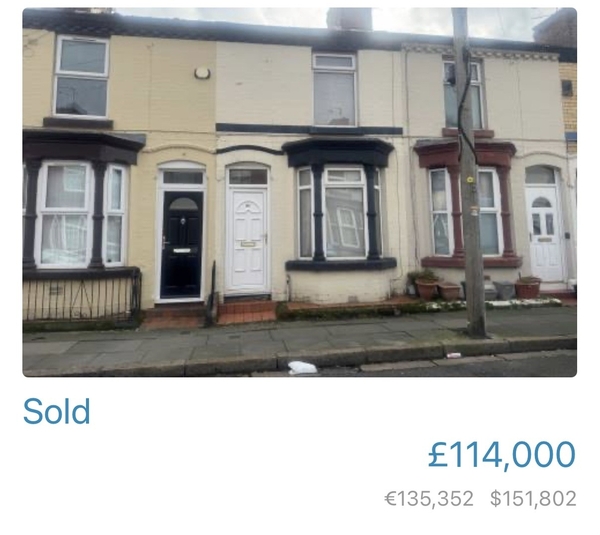
The auction we chose to leave
In May 2025, I wrote about an auction that produced a strong result for the seller. We stopped bidding in the low £80,000s. The property subsequently sold for £114,000, as shown in the original auction result.
One of my mentees had recently purchased a property in the next street for £75,000. Our account described that house as being in better condition, with a new roof, external insulation, a new heating system, an EPC rating of C and tenants in occupation. The auction property had an EPC rating of D and required work.
The 2 purchase prices differed by £39,000. The £114,000 sale was 52% above £75,000. Looked at from the other direction, £75,000 was approximately 34.2% below £114,000. Neither calculation establishes that the houses had identical market values.
The point is that we had reached the price our assessment supported. Continuing simply because another bidder was willing to pay more would have changed the investment we had set out to make.
The investment lesson: decide your maximum bid from the property, the evidence and your costs. Another person’s bid does not increase the rent you can collect or reduce the work you need to fund.
Set the maximum bid before the bidding starts
Work backwards from the outcome you require. For a rental purchase, examine sustainable cash flow after costs and the capital you will commit. For a resale, assess a realistic sale value, selling costs, finance, renovation costs and the margin needed to justify the project.
Use completed sales and rental evidence that match the property. Allow for differences in street, size, condition, tenure and tenancy. Ask a suitable professional where the evidence is uncertain.
The guide price helps market an auction lot. It is not a valuation you can adopt as your own, and it does not determine whether the eventual price suits your strategy.
Keep the bid separate from the total budget
A £100,000 budget does not mean you can bid £100,000. The price paid for the property sits alongside acquisition charges, taxes, professional fees, works, funding and a reserve.
| Budget item | Illustrative amount |
|---|---|
| Total funds allocated to the project | £100,000 |
| Assumed acquisition costs, fees and taxes | £8,000 |
| Assumed initial works | £7,000 |
| Cash retained for contingencies | £5,000 |
| Amount remaining for the purchase price | £80,000 |
These are hypothetical allowances, not a tax calculation or the costs of the May 2025 transaction. Replace every allowance with figures for the actual purchase. Some charges depend on the bid, so recalculate them when testing a different price.
The amount you can afford is only one limit. Your evidence may support a lower bid, or show that the purchase does not meet your objectives at all.
Complete the important checks before committing
- Inspect the property. Obtain appropriate advice on condition and budget for the work your intended use requires.
- Have the legal pack reviewed. Ask your solicitor to explain title issues, special conditions, extra charges and the contract.
- Confirm your finance. Establish that funding can meet the actual completion timetable, including a realistic exit from any short term loan.
- Check the latest information. Read the addendum and ask about changes to the particulars or terms before bidding.
- Write down the limit. Include it in any instructions to someone bidding on your behalf.
The RICS property auctions consumer guide explains the preparation and professional advice buyers should consider. Your solicitor should confirm when the specific auction method creates a binding commitment.
Do not let preparation costs dictate the next bid
After spending time viewing a house, paying for advice and arranging finance, it is natural to want a result. Those costs do not make an additional bid worthwhile. The next decision still needs to be justified by the property and the price.
A disciplined investor can acknowledge that another buyer has different plans or a different budget. You do not need to prove them wrong. You need to protect the funds allocated to your own strategy.
A quiet auction can be worth investigating, while a competitive sale may move beyond your limit. Keep looking at opportunities prior to auction and afterwards. Our guide to unsold auction property explains why the research can continue after bidding ends.
Put the research into practice
Our property auction courses cover valuation, legal packs, finance and bidding strategy. For help with an individual purchase, explore our Property Sourcing Liverpool service.
Walking away leaves your capital available for the next suitable opportunity. That can be a valuable outcome from an auction day.
Your questions answered
Should I increase my maximum bid during an auction?
Reassess a limit only when reliable new information changes the underlying investment assessment and you have time to evaluate it. Competitive pressure alone is not a reason to alter the budget.
Does an expensive auction result prove the buyer overpaid?
Not by itself. Buyers can have different plans, information and objectives. Judge your own bid against the evidence and your required outcome rather than assuming another bidder’s price is right for you.
Sources and case record
Adapted from our Original bidding case study, 21 May 2025. Current guidance is linked beside the relevant discussion. Updated 12 October 2026.

About Dominic Farrell
Dominic Farrell is a director of Tuna Fish Property, author of Property Auctions: Repossessions, Bankruptcies and Bargain Properties (4th edition) and host of The Property Auctions Podcast. His work combines property investment, sourcing and auction education.
He delivers The Property Auction Professional Mentorship through Distressed Assets.
Prepare your bidding strategy before auction day
Discuss an auction opportunity with our team or explore property auction training with Dominic Farrell. Bring the property, legal pack, costs and funding plan into one assessment.
This is a historical case study. Figures reflect the published account and do not guarantee another investor’s outcome. Acquisition costs, works, finance, tax and running costs affect the overall return.