

01
Find the right opportunities
Understand where auction opportunities come from and how to build a shortlist that fits your budget, experience and intended use.

Property Auctions · Fourth edition · 2026
Understand the opportunity. Do the research. Know when to bid and when to walk away.
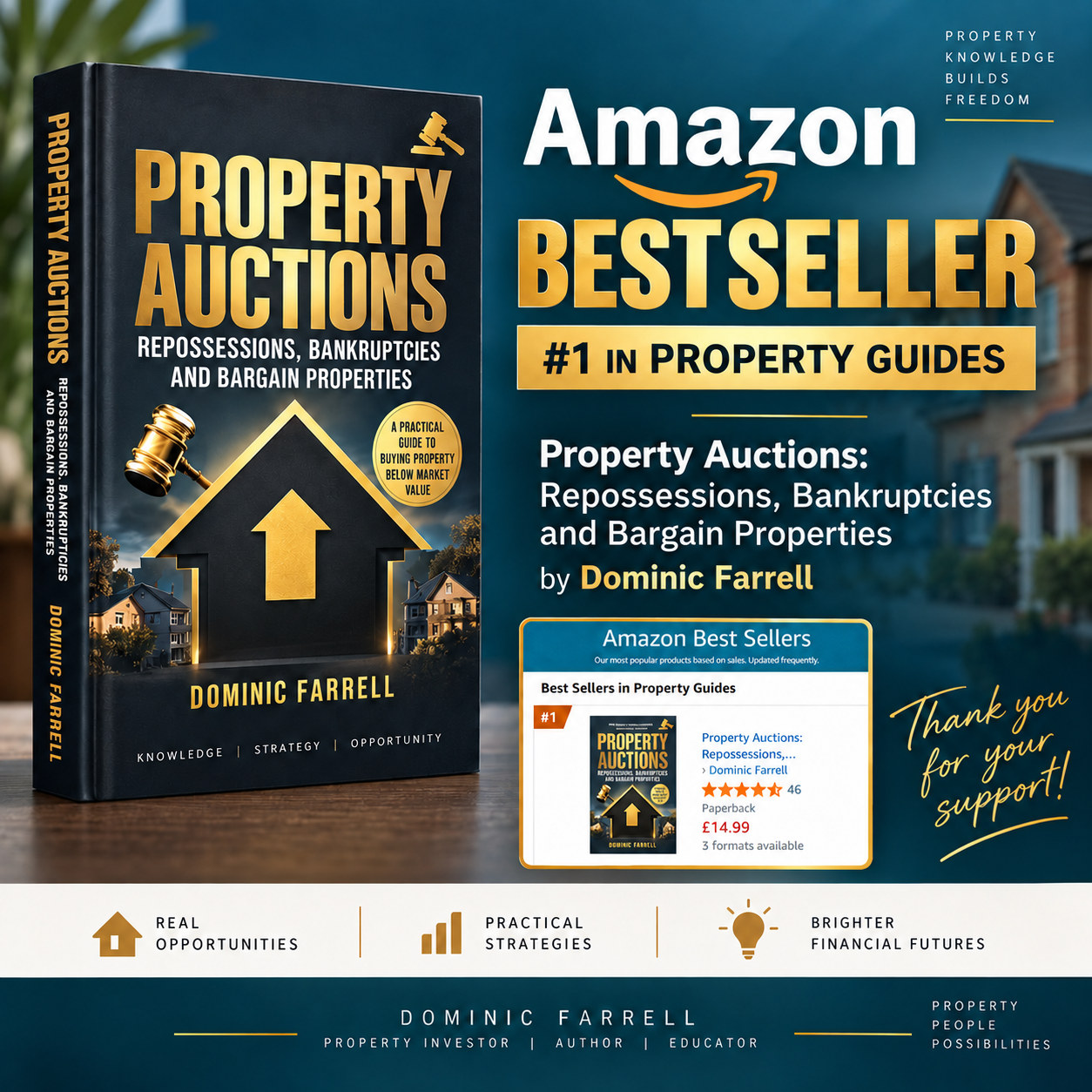
Property Auctions: Repossessions, Bankruptcies and Bargain Properties by Dominic Farrell takes you through finding, assessing and buying auction property, with practical guidance and examples from real purchases.
Whether you are preparing for your first auction or refining your approach as an investor, start with a clearer understanding of the property, the process and the numbers.
Paperback · 312 pages · Published 7 March 2026
Build your understanding
A useful auction book should help you ask better questions and make better decisions. These are the core areas covered, from the initial search through to the purchase itself.
01
Understand where auction opportunities come from and how to build a shortlist that fits your budget, experience and intended use.
02
Develop a clearer view of value, rental potential and likely costs before deciding whether a property deserves further investigation.
03
Approach inspections with a purpose, identify questions to investigate and connect a property’s condition with your plans for it.
04
Become familiar with auction paperwork and the issues to discuss with your solicitor before making a commitment.
05
Explore the role of funding in an auction purchase and why the route to completion belongs in your plan from the start.
06
Consider bidding tactics, purchases before auction and opportunities afterwards, illustrated by the author’s own experiences.
Reader feedback
“Any jargon was clearly explained.”
Colin highlights the accessible explanations, practical property assessment and coverage of online auctions.
“A handy reference guide.”
Dan values the complete buying process and examples of deals agreed outside the live auction.
“It is packed with sensible and clearly experienced advice.”
Daniel describes finding the process clearer as a buyer of commercial property through his SIPP.
Selected excerpts from Amazon reader reviews reproduced on Distressed Assets , with short editorial summaries. These March 2023 reviews relate to earlier editions of the book.

The experience behind the book
Dominic has been buying property at auction since 2008. His work includes distressed acquisitions, refurbishment, property sourcing and helping clients build rental portfolios.
As a director of Tuna Fish Property, he sees what happens after completion too: preparing a building, finding tenants and looking after the investment.
A former British Army officer and MBA graduate, Dominic brings a disciplined approach to preparation and risk. He also teaches through Distressed Assets and hosts The Property Auctions Podcast.
Put preparation first
For buyers in England and Wales, the work starts well before bidding. Use this as a starting checklist alongside advice on the particular property you intend to buy.
Decide whether you want a home, a rental investment or a refurbishment project. Research local sold prices and, where relevant, realistic rents. Set your criteria before a low guide price attracts your attention.
View the property and arrange appropriate survey advice. Check the condition, likely work and access. Ask questions about occupation, planning and intended use. Photographs and catalogue descriptions do not answer everything.
Instruct a solicitor experienced in auctions before bidding. They should check the title, special conditions, relevant searches and any leases or tenancies. Recheck amendments and the auction addendum before committing.
Discuss the actual property and completion deadline with your broker or lender. A mortgage agreement in principle is not a property specific lending commitment. Have accessible funds for the required deposit and fees.
Allow for purchase taxes, auction charges, legal and survey costs, finance, repairs and a contingency. For an investment, include holding costs and your intended exit. Decide your limit from the total commitment you can afford.
Complete the auctioneer’s registration and identity checks in time. Stick to your limit. If successful, pay the sums due, instruct your solicitor to progress completion and confirm when your insurance responsibility begins.
Further guidance: RICS consumer guide and Clive Emson’s buyer guidance . The conditions for your lot determine your obligations.

Take your knowledge further
The book gives you a foundation you can return to as you assess properties. If you prefer to learn through discussion and examples, explore the property auction courses and mentorship available through Distressed Assets.
For investors looking in Liverpool, Merseyside and Wirral, Tuna Fish Property can also discuss sourcing, viewings, refurbishment, lettings and ongoing management.
Start with your budget, objectives and experience. We can then discuss the support that fits the purchase you want to make.
Questions before you start
Yes. It introduces the process from finding and assessing a property through to viewing, finance and buying. Experienced investors can also use it to revisit their approach and consider examples from real transactions.
At a traditional, unconditional auction, a successful bid normally creates a binding purchase contract when the hammer falls or online bidding closes. A conditional sale, often called the modern method, usually starts with a reservation agreement and a separate fee. Read the particular terms before you bid.
Not necessarily. Mortgage or bridging finance may be possible, depending on the property and your circumstances. Confirm lending suitability and timing before bidding. The availability of a loan, and any later refinancing, should never be assumed.
Traditional auctions commonly require a 10% deposit, sometimes subject to a minimum, plus any fees due. Completion is often around 20 working days, but the lot’s conditions may specify a different period. Conditional sales have their own reservation fees and deadlines. Check the exact requirements with your solicitor.
Sometimes. The seller may accept an offer before the auction or consider an offer afterwards if the property remains available. Ask the auctioneer about the process and terms. Carry out the same legal, property and finance checks before committing.
The linked paperback is the fourth edition, published on 7 March 2026, with 312 pages. Its ISBN is 9781739354947. Check the edition and format on Amazon before ordering, particularly if you choose another seller or format.
Auction process guidance here relates to England and Wales. See the EIG completion guide and iamsold’s explanation of auction methods . Obtain legal and finance advice for your purchase.
Your next step
Start with the book, build your understanding and approach your next property decision with a clear plan.