



Liverpool auction case studies
Auction v estate agent prices in Liverpool: £70,000 and £106,000 next door
A £36,000 difference between neighbouring houses deserves investigation. To decide whether it reveals value, compare the properties, the dates and the complete cost of each purchase.
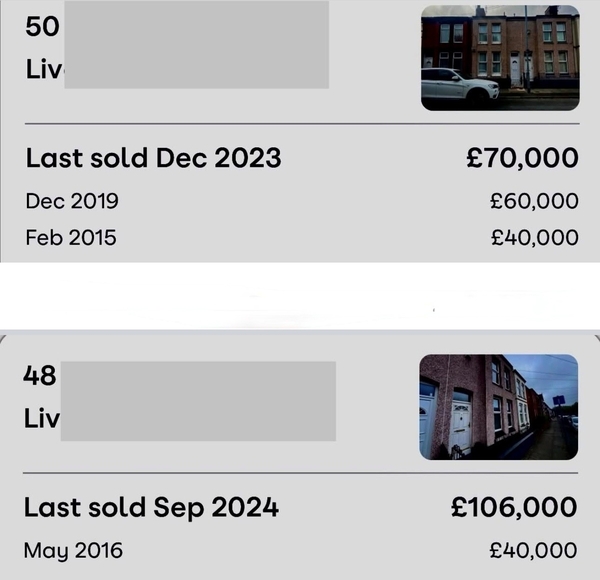
The historical comparison
In March 2025, I published a comparison involving neighbouring three bedroom houses in Liverpool. Our account recorded the acquisition of No. 50 at auction for £70,000. The property was tenanted and had an EPC rating of C. The accompanying image recorded that sale in December 2023, with No. 48 next door recorded at £106,000 in September 2024.
The later price was £36,000 higher, or approximately 51.4% above £70,000. That is a price comparison across 9 months. It does not, by itself, establish either property’s market value or the return earned by its owner.
A comparable is evidence to examine
The original account described the houses as identical and expected similar rent. A sound appraisal still needs to test those assumptions. Neighbouring properties can differ in layout, floor area, condition, roof, heating, tenure, tenancy and legal obligations. The market can also move between sales.
Use HM Land Registry’s sold-price search to investigate completed transactions, then examine the corresponding particulars, floorplans and available condition evidence. A recorded price is the beginning of a comparison, rather than proof that two purchases carried the same risks.
Ask whether one buyer acquired vacant possession, accepted a tenancy, inherited repair requirements or paid transaction-specific charges. Those details can explain part of an apparent discount.
Compare the cost of producing the income
For a rental investor, the relevant question is what the property can produce after its costs. If achievable rent is similar, a lower complete investment can leave more room for running costs, borrowing and reserves. But similar advertised rents do not establish similar collected income.
Include acquisition taxes, auction fees, legal work, any sourcing fee, necessary repairs and the cost of putting the property into operation. Then examine ongoing management, insurance, maintenance and finance. Our rental yield and cash-flow guide explains those distinctions.
Do not use the 51.4% price difference as a profit figure. We have not presented a resale of the £70,000 property or a complete investment-cost schedule here.
Buying at auction still requires judgement
I use retail and wholesale to describe different approaches to acquiring property. The useful lesson is to find a purchase whose price and risks leave a defensible margin. An auction can offer that opportunity, but competitive bidding can also take a property beyond a sensible maximum.
Set your ceiling from the evidence and the full costs. If another bidder is willing to pay more, that does not improve your own appraisal. The Liverpool bidding strategy case study shows how walking away can preserve capital for a different purchase.
Put the local evidence to work
Our Liverpool property sourcing service considers the individual street, property and buying route. Through property mentorship with Dominic Farrell, investors can also develop the skills to examine these comparisons themselves.
Bring a proposed purchase and the evidence supporting it. We can discuss the questions it raises, the missing information and whether the next step should be further investigation, a revised offer or a decision to walk away.
Continue your property education
Explore property auction courses, read Dominic’s property auctions book or listen to The Property Auctions Podcast. These resources complement the practical work of developing an investment brief with your property mentor.
Sources and historical context
- Original account: 7 March 2025, with the preserved redacted sale-record image
- HM Land Registry: https://www.gov.uk/search-house-prices

About Dominic Farrell
Dominic is a property investor and developer buying property since 1999, a director of Tuna Fish Property, author and podcast host. Explore his experience and approach to property mentorship.
Build the judgement behind your next purchase
Discuss your goals, resources and property plans with Dominic Farrell. Explore practical guidance through the Property Auction Professional Mentorship, delivered through Distressed Assets.
Historical case figures are attributed to the original accounts and are not current offers or guaranteed outcomes. Assess the particular property and obtain legal, tax, finance and surveying advice appropriate to the transaction.